Key Takeaways
- The 200-Week MA is the “God Candle” of support, historically marking every major Bitcoin cycle bottom.
- Altcoins require faster EMA settings (like the 9/21 combo) to capture volatility without getting trapped.
- Whipsaws are killed by “confirmation closes”, preventing you from buying fakeouts in choppy markets.
- The Death Cross is a lagging indicator; for crypto, it often signals a contrarian buy rather than a sell.
- Macro trends trump micro signals; always check Bitcoin’s position before trading low-cap alts.
Is Moving Average Analysis Still Reliable for Crypto in 2026?
Yes, but only if you adapt the settings to crypto’s volatility. Standard stock market averages (like the 50-day SMA) often fail in crypto without confirmation buffers.
For 2026, the most effective strategy combines the 200-Week MA for macro bottoms with exponential moving averages (EMAs) for short-term altcoin entries.
Crypto markets are “Whipsaw City.”
If you try to trade Bitcoin or Ethereum using the exact same moving average (MA) strategies meant for the S&P 500, you will likely get stopped out before the real move happens.
The volatility of 2025 taught us that price action respects specific dynamic zones more than static lines.
This guide breaks down exactly how to set up your charts to filter noise and identify the few signals that actually matter.
The ‘Bitcoin Investor’ Indicator: 200-Week MA
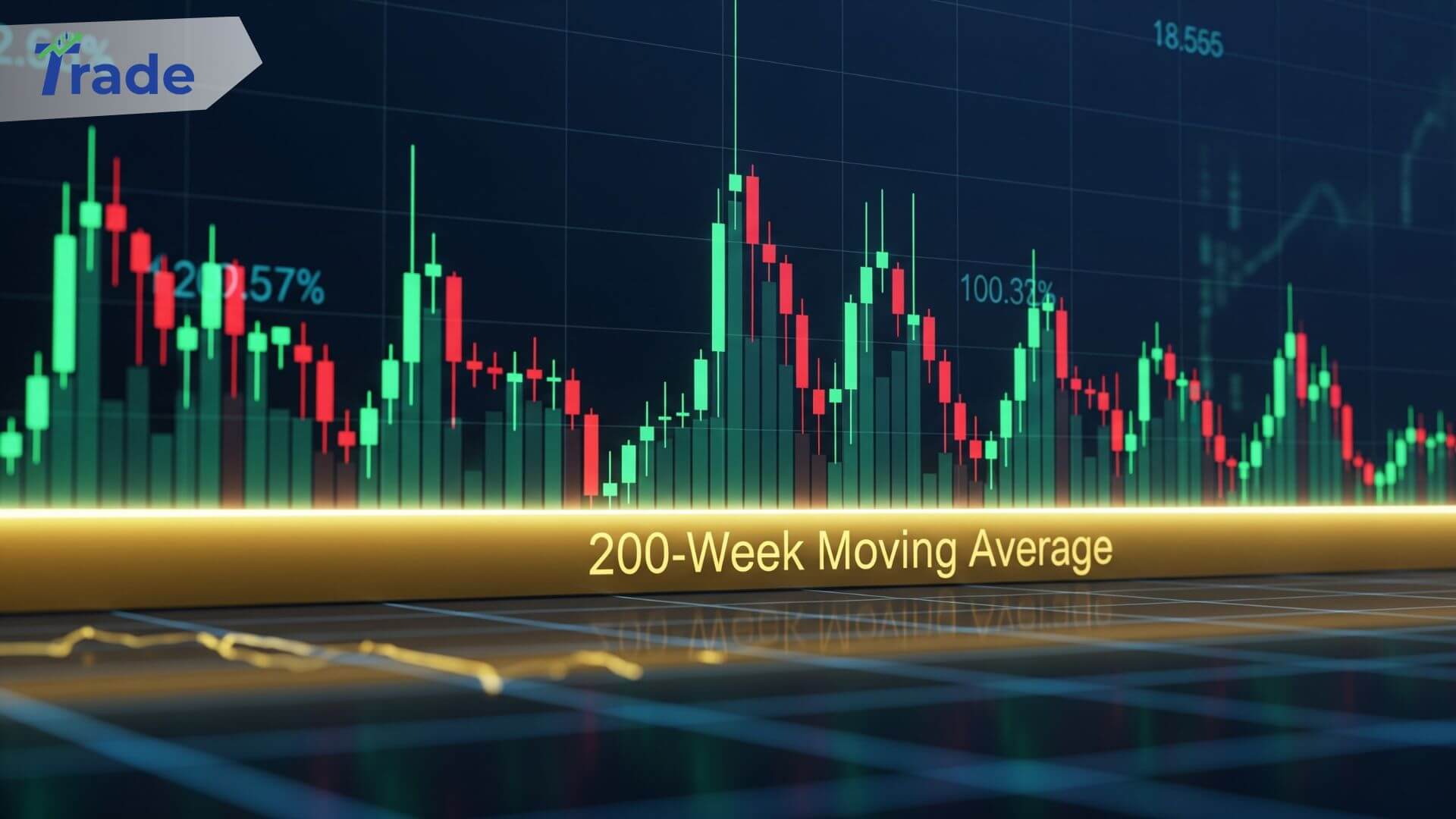
The 200-Week Moving Average (WMA) is widely considered the ultimate “value line” for Bitcoin, historically marking the floor of every major bear market.
In the high-speed world of crypto, looking at a weekly chart feels like watching paint dry. However, for serious investors, the 200-Week MA is the only line that matters for long-term accumulation. It is often referred to as the “Investor Tool” because it ignores the daily noise and highlights generational entry points.
Why It Works for Bitcoin
Unlike the 200-Day MA, which Bitcoin crosses frequently during mid-cycle corrections, the 200-Week MA has historically acted as a hard floor.
- The Heatmap Concept: Many analysts use a “Heatmap” overlay on this MA. When price touches or dips slightly below the 200-Week MA (shifting the color to blue or purple), it has historically signaled maximum financial opportunity.
- The “Wick” Phenomenon: Bitcoin often wicks below this level during capitulation events (like the COVID crash or the 2022 bottom) but rarely closes a weekly candle significantly below it.
Pro Tip: If Bitcoin is trading near its 200-Week MA, strictly limit your leverage. This is a spot accumulation zone, not a scalping zone.
For a comparison of how this differs from traditional markets, read our guide on Moving Averages for Stocks.
Handling Whipsaws in Altcoins
Altcoins are too volatile for standard Simple Moving Averages (SMAs). Using specific EMA combinations and “confirmation” rules reduces false signals.
A “whipsaw” occurs when the price crosses your moving average, triggering a buy signal, and then immediately reverses, hitting your stop loss. In the choppy altcoin markets of 2026, this is the most common way traders lose capital. You cannot eliminate whipsaws entirely, but you can drastically reduce them with two adjustments.
1. The “Confirmation Close” Rule
Never enter a trade the moment price touches or crosses a moving average.
- The Rule: Wait for the candle to close above the MA line.
- Why: Algorithms often push price through a key level to trigger stop-losses (liquidity grabs) before reversing. Waiting for a candle close filters out these fakeouts.
2. The Golden EMA Combo for Alts
For volatile assets like Solana or meme coins, replace the slower SMAs with Exponential Moving Averages (EMAs), which weigh recent price action more heavily.
✅ Card-Style Strategy: The 9/21 EMA Cross
Best for: Swing trading volatile Altcoins
Timeframe: 4-Hour or Daily Chart
- Setup: Plot a 9 EMA (Fast) and a 21 EMA (Slow) on your chart.
- The Buy Signal: When the 9 EMA crosses above the 21 EMA.
- The Sell Signal: When the 9 EMA crosses below the 21 EMA.
- Whipsaw Filter: Do not take the trade if both lines are flat (horizontal). Only trade when the 21 EMA is clearly angled up or down.
- Stop Loss: Place just below the recent swing low, not directly on the EMA.
The Death Cross in Crypto
Summary: A “Death Cross” occurs when the 50-Day MA crosses below the 200-Day MA. In crypto, this is often a lagging signal that traps late bears.
You will see “Death Cross” headlines all over crypto Twitter whenever Bitcoin corrects. While it sounds terrifying, historical data paints a different picture. Because moving averages are lagging indicators, by the time a Death Cross prints on the chart, the asset has usually already dropped significantly.
The “Bear Trap” Scenarios
In many instances (such as the mid-cycle corrections of 2021 and late 2025), the Death Cross marked the bottom of the correction, not the start of a new bear market.
- The Contrarian View: When a Death Cross occurs after a 30-40% drop, the market is often oversold. Sophisticated traders watch this level for a “relief rally” or a reversal, effectively trapping traders who panic-sell on the news.
- The Golden Cross: Conversely, the “Golden Cross” (50 crossing above 200) is a bullish confirmation, but buying blindly on the cross often leads to buying a local top.
Conclusion
Moving averages are not crystal balls; they are tools to manage risk in a chaotic market. For Bitcoin, the 200-Week MA serves as your long-term compass, keeping you grounded during panic. For altcoins, tightening your settings to a 9/21 EMA combo helps you catch waves while the “Confirmation Close” rule keeps you safe from the chop.
If you are seeing mixed signals, zoom out.
If price is above the 200-Day MA, the macro trend is up, and short-term dips are usually buying opportunities.
If it’s below, defensive strategies apply.
FAQs About Moving Average for Crypto
What is the best moving average for crypto day trading?
The 9 and 21 EMAs on a 15-minute or 1-hour chart are standard for day trading as they react quickly to volatility.
Does the 200-Day moving average work for altcoins?
Yes, but mostly for high-cap alts like Ethereum or Solana. Low-cap coins are too volatile for the 200-Day to act as reliable support.
What is a “Golden Cross” in crypto?
A Golden Cross happens when the short-term 50-Day MA crosses above the long-term 200-Day MA, signaling a potential long-term bull trend.
How do I stop getting whipsawed in sideways markets?
Stop trading trend-following strategies (like MA crossovers) when the MA lines are flat. Switch to support/resistance trading until a trend emerges.
Is the 200-Week MA relevant for Ethereum?
It is useful, but Ethereum has less historical data than Bitcoin. It is best used as a secondary confirmation rather than a primary signal.
Should I use SMA or EMA for Bitcoin?
Use SMA (Simple Moving Average) for long-term support/resistance levels (like the 200-Day). Use EMA (Exponential) for shorter-term trend trading.