Key Takeaways
- EP, TP, and CL are your trade blueprint: Entry Price, Target Price, and Cut Loss.
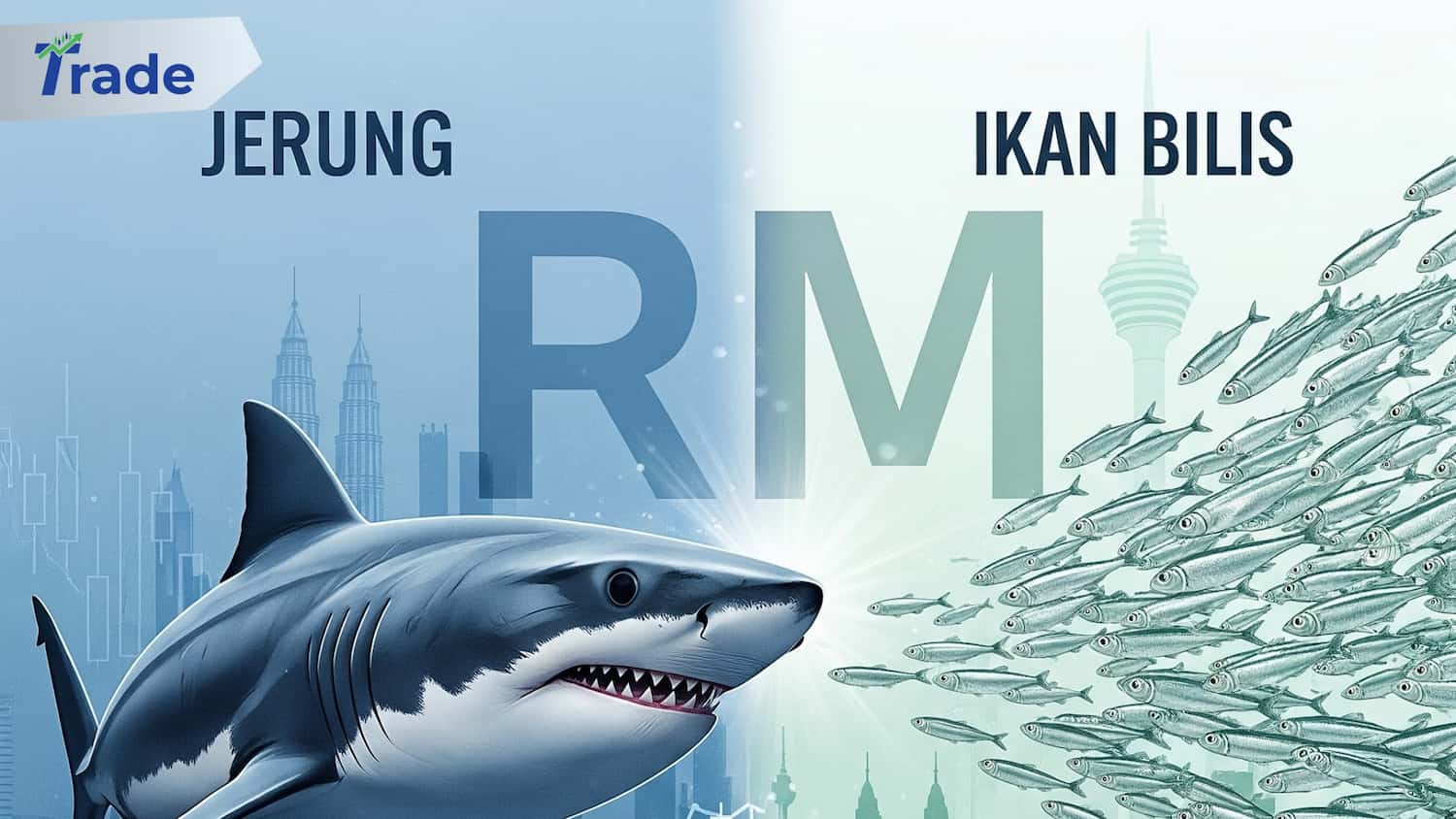
- “Jerung” (Sharks) control the waves; “Ikan Bilis” (Retailers) just try to survive them.
- “Goreng” stocks are highly manipulated; high profit but extreme risk of “Cuci Piring” (losses).
- “Mother” refers to the main share, while “Anak” usually refers to warrants (cheaper, riskier).
- CDS Account is mandatory to trade; you cannot buy shares without one.
Walk into any Malaysian trading Telegram group, and it sounds like a different language. “Jerung is pushing,” “Standby to sapu,” or “Hit CL already?” If you are lost, you are not alone. To survive the Bursa Malaysia waves, you need to speak the language of the locals.
This guide translates the confusing “Manglish” and shortforms so you can trade with confidence—not just guess.
The 1-Minute Bursa Dictionary
| Shortform / Slang | Full Name / Meaning | Context |
| TP | Target Price | “Sell when it hits 1.50 (TP).” |
| CL / SL | Cut Loss / Stop Loss | “Exit now to prevent big loss.” |
| EP | Entry Price | “My buy price was RM0.50.” |
| Jerung | Shark (Syndicate/Insto) | Big money movers controlling price. |
| Ikan Bilis | Anchovies (Retailers) | Small investors (You and Me). |
| Goreng | Fry (Manipulate) | Artificial price pumping. |
| QR | Quarterly Report | Company earnings result. |
1. Essential Trading Acronyms (The Technicals)
These are the standard abbreviations every trader uses to plan their strategy.
You will see these in every “Buy Call” or analyst report. Ignoring them is the fastest way to lose money.
EP (Entry Price)
The specific price at which you bought (or plan to buy) a stock.
Knowing your EP is crucial for calculating your profit or loss later. In trading groups, “Call EP” means the recommended price range to buy in.
- Example: “Valid EP: 0.50 – 0.52” (Buy between these prices).
- Tip: Never chase a stock if the price has already shot up far past the recommended EP.
TP (Target Price)
The goal line; the price where you plan to sell for a profit.
Traders often have two TPs: TP1 (Conservative/Safe) and TP2 (Aggressive). It is the discipline of knowing when to take money off the table.
- Example: “TP1: 0.60, TP2: 0.65”.
- Reality Check: Don’t be greedy. If it hits TP1, consider selling half your shares to lock in profit.
CL (Cut Loss)
The safety net; the price where you sell to stop further pain.
This is the most painful but important lesson. If a stock drops to your CL price, you sell immediately to prevent a 10% loss from becoming a 50% disaster.
- Synonym: SL (Stop Loss).
- Golden Rule: “Plan your trade, trade your plan.” If it hits CL, you click sell. No emotions.
2. Local “Manglish” Slang (The Street Talk)
This is the informal language used in mamak sessions and Telegram groups.
Malaysian traders love using metaphors involving food and animals to describe market movements.
Jerung (The Shark)
Refers to institutional investors, syndicates, or fund managers with huge capital.
When a “Jerung” enters a stock, the price moves significantly because they buy in massive volume. They create the waves.
- Usage: “Jerung is collecting, volume is coming in.”
- Warning: Do not try to fight the Jerung. Swim with them, not against them.
Ikan Bilis (The Anchovies)
Refers to retail investors—the small players like us.
We don’t have enough money to move the market price on our own. We are just “floating” around trying to catch crumbs dropped by the Jerung.
- Usage: “Ikan bilis panic selling again.”
- Context: Often used when prices drop slightly because small traders get scared.
Goreng (Fried / To Fry)
The act of manipulating or “pumping” a stock price without strong fundamentals.
A “Counter Goreng” is a stock that shoots up very fast (pumped) and usually crashes just as fast (dumped).
- Risk Level: Extreme.
- Scenario: “Don’t touch that stock, it’s being goreng-ed.”
- Outcome: If you are slow, you might end up “Cuci Piring” (Washing dishes)—meaning you entered late, the party is over, and you are left with the losses.
Sapu (Sweep)
To buy aggressively or “clear the queue.”
When traders shout “Sapu!”, it means buy whatever is available at the current selling price because they believe it will go up fast.
- Usage: “Price breakout! Sapu!”
- Similar to: “Cheong” (Rush in).
3. Market Status Terms
Understanding the status of a stock or the market itself.
Limit Up / Limit Down
The maximum amount a stock price can rise or fall in a single day.
Bursa Malaysia has circuit breakers.
- Limit Up: Price increases by 30% (or 30 sen for stocks under RM1). You literally cannot buy higher.
- Limit Down: Price drops by 30% (or 30 sen). You literally cannot sell lower.
PN17 (Practice Note 17)
A distressed company that is in financial trouble.
If a stock has [PN17] next to its name, be very careful. It means the company is at risk of being delisted (removed) from the stock exchange if they don’t fix their finances.
- Risk: If delisted, your shares may become worthless or very hard to sell.
Mother vs. Anak
The difference between the main share and its derivatives.
- Mother: The actual common share (e.g., MAYBANK).
- Anak (Child): The Warrant or Loan Stock (e.g., MAYBANK-C50).
- Context: “Anak” is usually cheaper but has an expiry date. If you don’t sell or convert “Anak” before the expiry, it becomes zero.
Still confused about where to start?
Don’t worry, every “Tai Ko” (Big Brother/Expert) was once an “Ikan Bilis”. Start by mastering the EP, TP, and CL discipline before worrying about the “Goreng” stocks.
Conclusion
Learning the shortforms is the first step to financial literacy in Malaysia. Whether you are tracking a “Jerung” or setting a tight “CL,” understanding these terms ensures you aren’t trading blind. The market is noisy; clear definitions are your noise-canceling headphones.
FAQs About Malaysia Stock Market Jargon
What does “Q” or “Que” mean in trading?
It stands for “Queue.” When you place an order to buy at a lower price, you are “queuing” in line waiting for a seller to match your price.
What is a CDS Account?
Central Depository System. It is like a bank account for your shares. You cannot trade in Malaysia without opening one through a broker.
What does “T+2” mean?
This is the settlement period. If you sell your shares today (Monday), the cash usually becomes withdrawable 2 working days later (Wednesday).
What is “Contra” trading?
Buying shares without using your own cash, hoping to sell them for a profit within 2-3 days before the payment is due to the broker. Highly risky for beginners.
Why do people say “Park” price?
“Parking” means placing a buy order at a specific support level and waiting patiently for the price to drop to you, rather than chasing it up.
What is “Durian Runtuh”?
Literally “fallen durian,” it means a windfall. In stocks, it refers to unexpected massive dividends or a sudden easy profit from a trade.