Key Takeaways
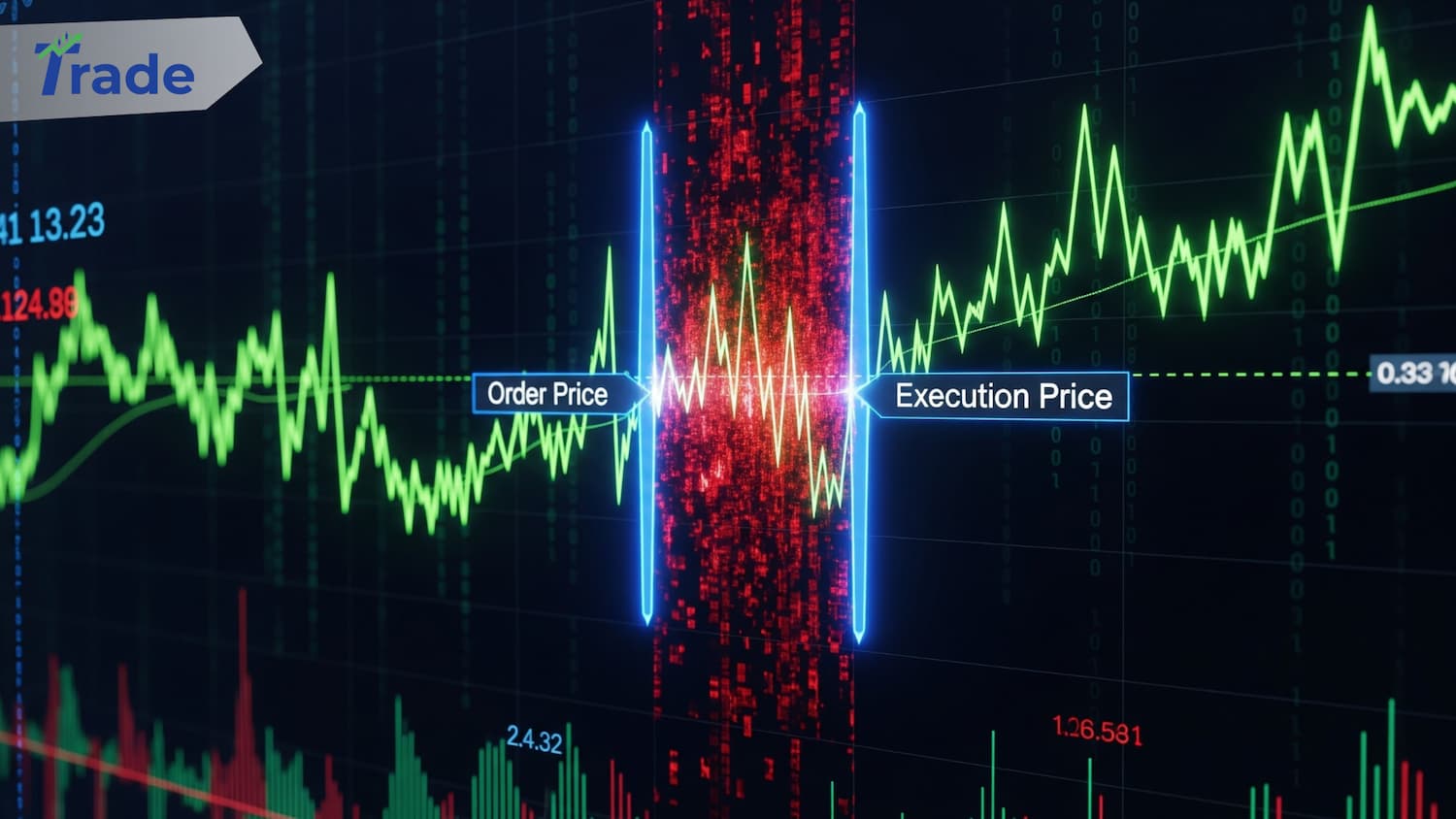
- Slippage is the difference between your requested price and the actual filled price.
- It happens due to market speed (volatility) or lack of buyers/sellers (liquidity), not just broker interference.
- News events (like NFP) are the most common cause of negative slippage.
- Positive slippage exists; if you only ever experience negative slippage, your broker might be unethical.
- Limit Orders are the best defense, as they guarantee price (but not execution).
Why Did My Entry Price Change?
You see the price at 1.0500. You click “Buy.” But when the trade appears in your terminal, the entry price is 1.0502. You are instantly losing 2 pips before the market even moves.
Did the broker just cheat you?
In most cases, no. This is called Slippage, and it is a natural part of trading the global currency markets. For Malaysian traders, understanding why this happens—and how to stop it—is crucial for protecting your capital and keeping your sanity.
What Exactly is Slippage?
Think of it like booking a Grab car during a thunderstorm.
You open the app and see a fare of RM15. You click “Book.” But in the few seconds it takes to connect to a driver, demand spikes, and the app updates: “Fare is now RM18.”
In Forex, the mechanism is similar:
- The Request: You click Buy EUR/USD at 1.0500.
- The Journey: Your order travels from your home WiFi in Malaysia to the broker’s server (likely in London or New York).
- The Change: In those milliseconds, big banks bought millions of Euros, pushing the price to 1.0502.
- The Fill: The broker fills your order at the current market price: 1.0502.
That difference (0.0002 or 2 pips) is slippage.
Why Does Slippage Happen? (The Technical Reasons)
It is rarely a person sitting at a desk pressing a “cheat” button. It is usually caused by two specific market conditions.
1. Volatility (The “Fast Market”)
During major news events—like the US Non-Farm Payrolls (NFP) or CPI Data—prices don’t move smoothly. They “teleport.”
- 8:29:59 PM: Price is 1.0500
- 8:30:00 PM: News releases, price jumps instantly to 1.0550.
If you had a Stop Order at 1.0510, the market literally never existed at that price. The broker must give you the next available price, which might be 1.0550.
2. Low Liquidity (The “Empty Market”)
This often happens during the daily “Rollover” period (around 5:00 AM – 6:00 AM Malaysian time). This is when New York banks are closing and Tokyo hasn’t fully opened. There are very few buyers and sellers.
- If you try to sell a large position, there might be no buyer at your exact price. The system searches down the ladder for the next buyer, giving you a slightly worse entry.
Comparison: Normal Market vs. Broker Scam
| Feature | Normal Market Behavior | Broker Manipulation (B-Book Scam) |
| Direction | Slippage goes both ways. Sometimes you get filled at a better price (Positive Slippage). | You only ever get worse prices. You never see positive slippage. |
| Chart Data | Matches Global Charts. If you check TradingView or another broker, they show the same price jump. | The “Ghost” Spike. Your broker shows a huge spike that hit your Stop Loss, but other brokers don’t. |
| Timing | News/Rollover. Happens during high-impact news or market open/close. | Random. Happens on a quiet Tuesday afternoon with no news events. |
| Execution | Fast. The trade opens instantly, just at a different price. | Re-quotes. The platform freezes or asks “Price changed, do you accept?” repeatedly to delay you. |
Pro Tip: If you suspect foul play, open a demo account with a reputable Tier-1 regulated broker and compare the candle wicks side-by-side for the same timeframe.
How to Prevent or Minimize Slippage
You cannot eliminate slippage 100% if you trade at “Market,” but you can use these tools to control it.
1. Use Limit Orders (The “Rebound” Strategy)
A Limit Order guarantees the price.
- “Buy Limit at 1.0500” tells the broker: “Fill me at 1.0500 or better. Do not fill me at 1.0501.”
- The Trade-off: If the price touches 1.0501 and flies away, you miss the trade entirely. But you will never suffer negative slippage.
2. Avoid “News Trading”
For beginners, the easiest fix is to stay out of the market 15 minutes before and after “Red Folder” news events (check Forex Factory). The spreads widen and price gaps are almost guaranteed during these windows.
3. Use a VPS (Virtual Private Server)
Malaysia is geographically far from major forex servers (London/NY). This creates “latency” (lag).
- Home WiFi: ~200-300ms delay.
- VPS: ~2ms delay.
A VPS is a computer rented near the broker’s server that runs your MT4/MT5 24/7. Faster connection means less time for the price to change before your order arrives.
Conclusion
Slippage is frustrating, but it is usually a sign of a real, functioning market, not a scam. If you want speed, you pay the price of slippage. If you want price certainty, you use Limit Orders. Understanding this trade-off is the first step to professional risk management.
Still worried about your broker’s honesty? Check our suggested Top Forex Broker for more.
FAQs About Slippage
Can I get slippage on my Stop Loss?
Yes. A Stop Loss becomes a “Market Order” once triggered. If the price crashes during news, your SL at 1.0500 might actually close at 1.0490. This is a risk all traders face.
Is slippage worse on MT4 or MT5?
The platform matters less than the broker and the server connection. However, MT5 is technically faster (64-bit) and processes orders slightly quicker than the older MT4.
Does slippage happen in Crypto trading too?
Yes, and often worse. Crypto markets have lower liquidity than Forex, meaning a large order can shift the price significantly, causing massive slippage on smaller exchanges.
What is “Maximum Deviation” in MT4?
This is a setting in the order window where you can tell MT4: “If the slippage is more than 3 pips, cancel the trade.” It protects you from bad fills but might cause you to miss fast-moving trades.