Key Takeaways
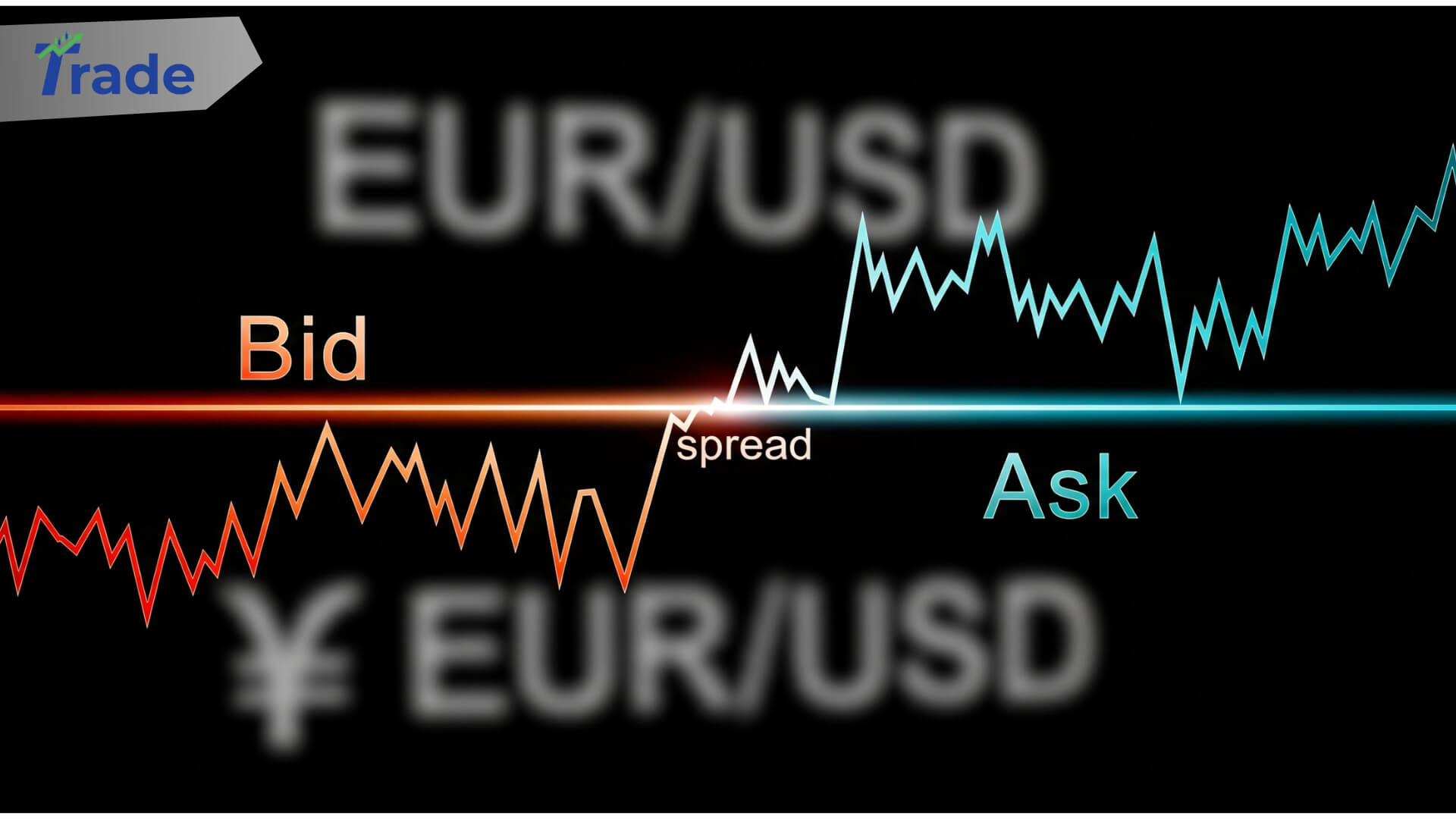
- The spread is the difference between the Buy (Ask) and Sell (Bid) price; it is your cost of trading.
- You always pay the spread when entering a market order, starting every trade slightly in the negative.
- Liquidity tightens spreads (cheaper), while volatility and news events widen them (more expensive).
- Major pairs like EUR/USD typically have the lowest spreads due to high trading volume.
- Limit orders can help you control entry prices and potentially avoid paying premium spreads during chaos.
Understanding Forex Spreads: Calculation, Factors, and Examples
In Forex trading, the spread is essentially a transaction fee built directly into the currency price. You don’t usually pay a separate commission ticket; instead, you pay the “gap” between the market prices. Whether you are scalping EUR/USD or holding positions, ignoring this cost can bleed your account. This guide breaks down exactly how to calculate it and why it changes.
Bid vs. Ask: The Basics
Compare the two prices you see on every broker terminal.
| Feature | Bid Price (Sell) | Ask Price (Buy) |
| Definition | The highest price the market will pay you. | The lowest price the market will sell to you. |
| Your Action | You SELL at this price. | You BUY at this price. |
| Chart Visualization | Usually the default line on the chart. | Often a hidden line slightly above the Bid. |
| Result | Lower than the Ask price. | Higher than the Bid price. |
What Is the Bid-Ask Spread?
The Spread is the gap between the Buy and Sell price.
When you open a trade, you are crossing this gap. If you buy, you pay the higher price (Ask). If you immediately turn around and sell, you get the lower price (Bid).
Note: This is why every trade starts in the red (negative). To break even, the market price must move in your favor by the exact distance of the spread.
For example, if the EUR/USD spread is 1 pip, the market must move up by 1 pip just for you to reach zero profit/loss.
How to Calculate the Spread Cost
To understand the true cost, you must calculate the spread in Pips, not just dollars.
The Formula
Spread=Ask Price−Bid Price
Real-World Forex Example (EUR/USD)
Let’s say you are trading the Euro against the US Dollar.
- Ask Price: 1.0852
- Bid Price: 1.0850
1.0852−1.0850=0.0002 (2 Pips)
If you trade 1 Standard Lot (100,000 units), each pip is worth $10.
- Your Cost: 2 pips × $10 = $20.00 instantly charged to open the trade.
3. Factors That Affect Spread Size
Why does your broker charge more at certain times?
Spreads are not static. They stretch and shrink based on market health.
🔹 Liquidity (Volume)
High Liquidity = Low Spread.
Major pairs like EUR/USD and USD/JPY have billions of dollars traded every minute. Because there are so many buyers and sellers, it is easy to find a match, keeping the spread tight (often 0.1 to 1.0 pip).
🔹 Volatility (Market Chaos)
High Volatility = High Spread.
During major news events (like NFP or Interest Rate decisions), market makers face higher risk. To protect themselves, they widen the spread. A typical 1-pip spread can suddenly jump to 10 pips or more in seconds.
🔹 The Trading Session
Off-Hours = Higher Costs.
If you trade during the “rollover” period (approx 5:00 PM EST) or when major markets (London/New York) are closed, liquidity drops, and spreads naturally widen.
Types of Spreads Explained
Different brokers offer different structures.
✅ Fixed Spreads
Best For: News Traders & Beginners
The broker guarantees the spread will not change (e.g., always 2 pips on EUR/USD), regardless of market volatility.
- Pro: Predictable costs; protects you during news spikes.
- Con: Usually higher than the average variable spread; requotes can occur.
✅ Variable (Floating) Spreads
Best For: Scalpers & Day Traders
The spread moves with the market. In calm times, it can be as low as 0.1 pips.
- Pro: Cheaper during normal market hours.
- Con: Can widen dangerously during economic announcements.
How to Avoid Paying High Spreads
Strategies to minimize your transaction costs.
- Trade High-Liquidity Sessions: Focus on the London and New York overlaps (8:00 AM – 12:00 PM EST) when volume is highest.
- Avoid “Exotic” Pairs: Pairs like USD/TRY (Turkish Lira) or USD/ZAR (Rand) often have massive spreads compared to EUR/USD.
- Use Limit Orders: Instead of using a “Market Order” (which pays the spread immediately), set a “Limit Order” at a specific price. This forces the market to come to you, potentially saving entry costs.
Conclusion
The spread is the cost of doing business in Forex.
While you cannot eliminate it, understanding how it is calculated allows you to choose the right pairs and trading times. Always check the spread on your terminal before clicking buy or sell—especially during volatile news events—to ensure your trade makes mathematical sense.
FAQs About Forex Spread
What is a good spread for EUR/USD?
A competitive spread for EUR/USD on a standard account is typically between 0.6 and 1.2 pips. On ECN accounts (raw spreads), it can be as low as 0.0 to 0.2 pips, though you will pay a separate commission fee.
Why do spreads widen at 5 PM EST?
This is the “rollover” time when the New York session closes and the Asian session has not fully ramped up. Liquidity is at its lowest point of the day, causing banks and brokers to widen spreads to offset the lack of volume.
Do I pay the spread when I close a trade?
Technically, you pay the spread once per trade cycle. When you buy, you enter at the higher Ask price (paying the spread). When you close the trade, you sell at the Bid price. The “cost” is realized effectively at entry, as you start the trade with a negative P&L.
Is a fixed or variable spread better?
For most traders, variable spreads are cheaper over the long run because they are tighter during active hours. Fixed spreads are better only if you trade specifically during extremely volatile news events where variable spreads might blow out.
Can I trade with zero spread?
Yes, “Zero Spread” or “Raw Spread” accounts exist. In these accounts, the spread is 0 pips, but the broker charges a fixed commission (e.g., $3.50 per lot) per side. This is often transparent and preferred by professional scalpers and is the model typically used by a low spread broker.
Does leverage affect the spread?
No, leverage does not change the width of the spread (pips). However, leverage increases your lot size, which makes the dollar value of that spread cost much higher relative to your account balance.