For many retail investors in Malaysia, the “Annual Report” is a daunting, 300-page PDF that remains unread until a major stock price crash occurs.
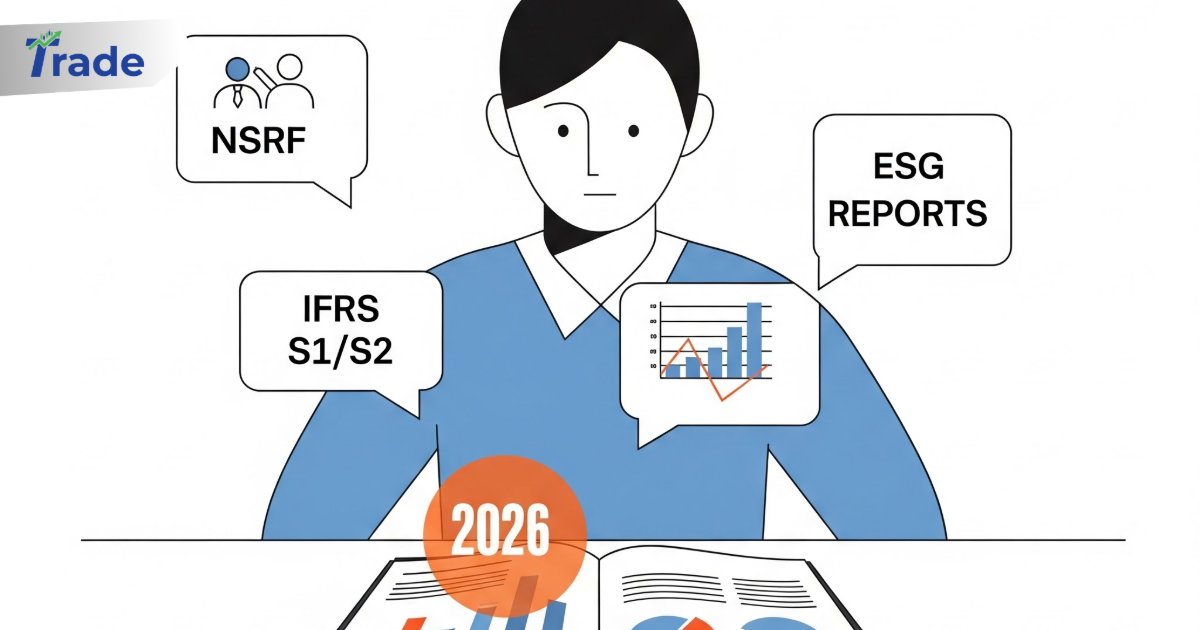
In 2026, however, the annual report has evolved from a simple financial summary into a high-tech, multi-dimensional document. With the phased rollout of the National Sustainability Reporting Framework (NSRF) and global ISSB (IFRS S1 & S2) standards entering its second year, the 2026 reports are more transparent—and more complex—than ever before.
If you want to move beyond “following tips” on Lowyat and start making data-driven investment decisions, you must master the art of navigating these reports.
This guide will show you exactly where to look, what the new 2026 regulations mean for your portfolio, and how to filter out the corporate “fluff.”
1. The 2026 Paradigm Shift: NSRF and IFRS S1/S2
Before we look at the numbers, you need to understand the new “language” of Bursa reporting . Companies with a market cap over RM2 billion already started this in 2025. As of 2026, the mandate expands to include all other Main Market listed issuers, requiring them to align their reports with IFRS S1 (General Disclosures) and IFRS S2 (Climate-related Disclosures).
What this means for you:
- Financial-Grade Sustainability: ESG data is no longer “fluff.” It is transitioning to be audited and verified with the same rigor as financial statements.
- Climate Risk Pricing: Companies must now state exactly how floods, carbon taxes, or the transition to green energy will affect their bottom line.
- The CSI Platform: Look for mentions of the Centralised Sustainability Intelligence (CSI) Platform. This is where Bursa stores standardized ESG data, allowing you to compare companies “apples-to-apples.”
Forum Insight (r/MalaysianPF): “In 2024, we complained about ‘Greenwashing.’ In 2026, the IFRS S2 standards make it much harder for companies to lie about their carbon footprint. If you don’t see Scope 3 emissions data in the 2026 report, the company is likely hiding a massive supply chain risk.” — User: ESG_Detective
2. The Five-Minute “Quick Look” Strategy
You don’t need to read all 300 pages. For a quick health check of a company like Maybank, Inari, or YTL Power, focus on these four sections in order:
A. The “Performance Data Table” (The 2026 Standard)
Bursa requires standardized ESG metrics.
Search for this section to find three-year historical trends. Every company must report on core matters, including Anti-corruption, Energy Management, and Diversity.
B. Management Discussion & Analysis (MD&A)
This is where the CEO and CFO explain what actually happened. Ignore the glossy photos and look for specific reasons behind profit drops and forward-looking targets for 2027.
C. The Statement of Assurance
In 2026, “Greenwashing” is a major risk. While mandatory reasonable assurance for Scope 1 and 2 emissions only kicks in starting 2027 (for top-tier companies), check if the data already has voluntary External Assurance. If a reputable auditor has signed off on the ESG data, the report is significantly more trustworthy.
D. The Audit Report
Flip to the financial statements and find the Independent Auditors’ Report. You are looking for one phrase: “give a true and fair view.” If you see any “qualifications” or “disclaimers,” close the PDF and look for another stock.
3. Navigating the Financial Statements: The “Big Three”
For beginners, the financial section can be overwhelming. Focus exclusively on these three pages:
| Statement | What to look for (2026 Context) | Red Flag |
| Comprehensive Income | Revenue vs. Net Profit. In 2026, look for “Non-Interest Income” for banks or “Subscription Revenue” for tech. | Revenue is up, but Profit is down (Signaling rising operating costs). |
| Financial Position | Cash vs. Debt. High-interest rates in 2026 mean companies with low debt are significantly safer. | “Current Liabilities” higher than “Current Assets” (Liquidity crunch). |
| Cash Flows | Net Cash from Operating Activities. This is real money in the bank. | Profits are high, but Operating Cash Flow is negative. |
4. The “Lowyat & Reddit” Deep Dive: Reading Between the Lines
Malaysian investment forums are where the “real” analysis happens. Here are the three most discussed “Red Flags” for 2026 annual reports:
The “Carbon Tax” Box
Search the PDF for the word “Carbon.”
If the company is in the iron, steel, or energy sectors and doesn’t mention the 2026 Malaysia Carbon Tax impact, they are not being transparent about their future costs. (Note: The 2026 tax initially targets only these heavy-emitting industries).
The “Scope 3 Nightmare”
A recurring theme on r/MalaysianPF is the struggle of SMEs to comply with the reporting needs of large PLCs.
If you don’t see Scope 3 emissions data in the 2026 report, don’t panic—the NSRF provides a 2- to 3-year transition relief for these disclosures. However, progressive companies will already be highlighting how they are helping SME suppliers with the PACE initiative.
The “Director Remuneration” Test
- Compare the “Directors’ Remuneration” table with the “Net Profit” growth. “Management alignment” is the most cited reason for long-term holds.
5. The 2026 ESG Checklist: Is the Company “Future-Proof”?
With the NSRF in full swing, your analysis must include these 2026 sustainability markers:
- Scope 1 & 2 Emissions: Is the company showing a year-on-year reduction?
- Materiality Matrix: Does the company care about the same things you do? (e.g., labor rights in the glove sector or energy efficiency in data centers).
- Governance Structure: Is there a specific Board member responsible for Sustainability? In 2026, this is a requirement for all Main Market players.
6. Where to Find Reports in 2026?
- Bursa Malaysia Website: The official source. Use the “Company Announcements” filter.
- Investor Relations (IR) Pages: Usually have a cleaner, more interactive version of the report with searchable charts.
- Broker Apps: Platforms like Moomoo Malaysia and Rakuten Trade now integrate “Financial Highlights” and “ESG Scores” directly into the stock view, which is a great summary of the full report.
Conclusion: Start Small
You don’t need to become an accountant overnight. Start by downloading the annual report of a company you already own. Spend 20 minutes looking at the MD&A and the Performance Data Table.
In the 2026 market, the most successful traders aren’t the ones with the fastest internet; they are the ones who can read between the lines of a Bursa annual report. Use the forums to find the “dirt,” but use the Annual Report to find the “truth.”